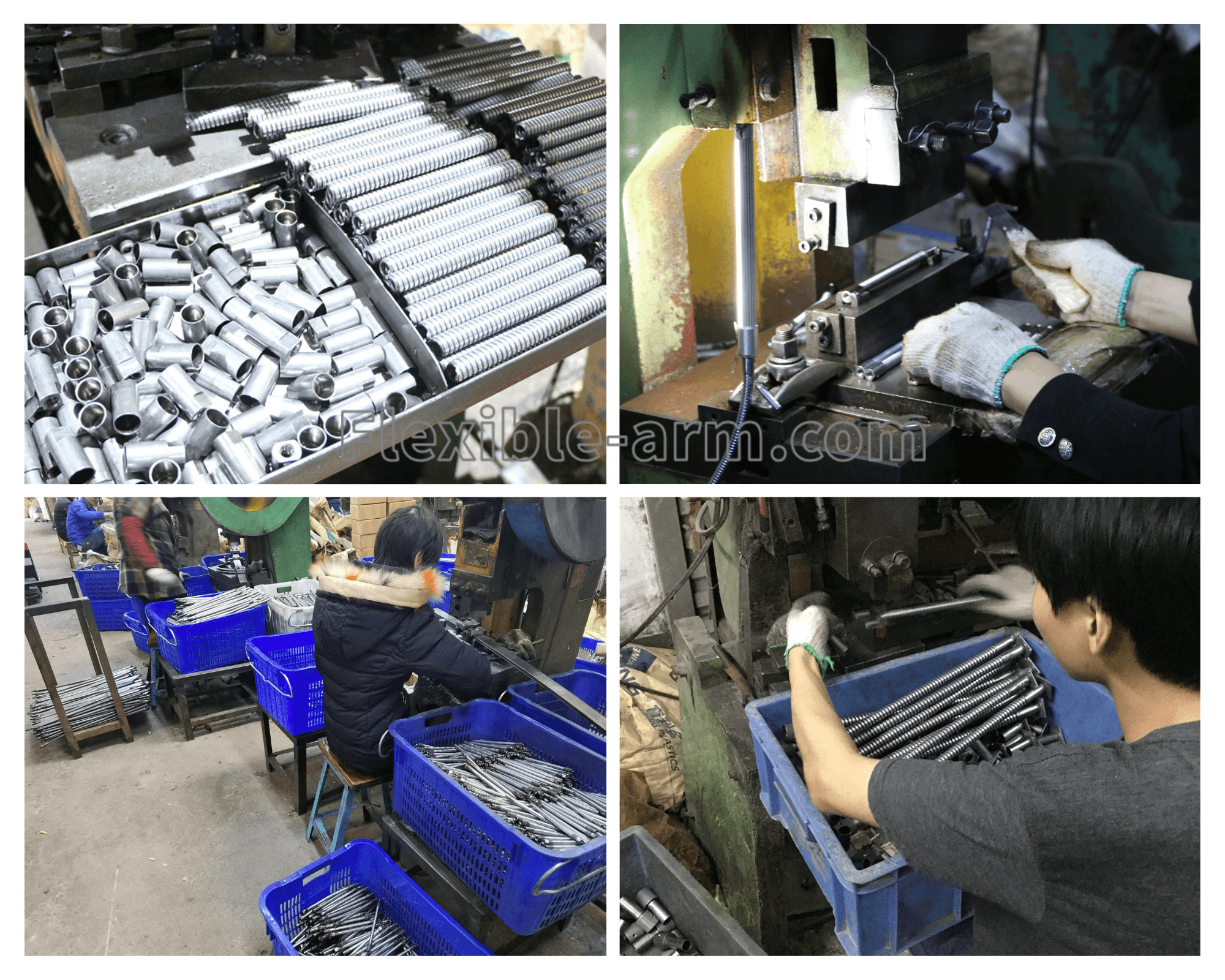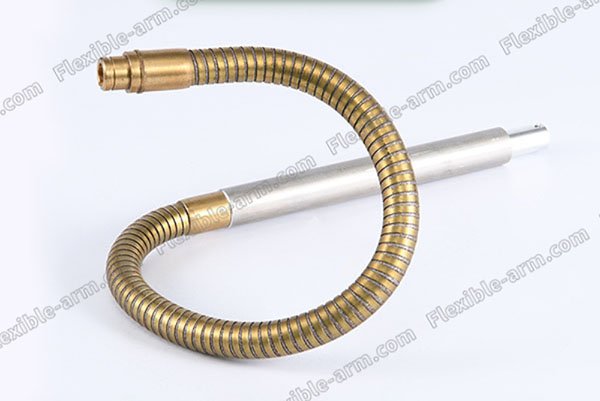
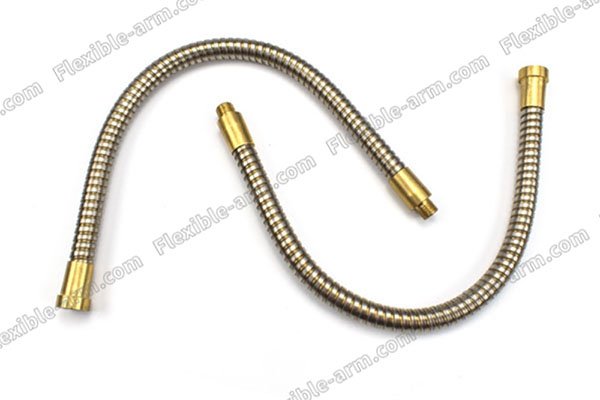

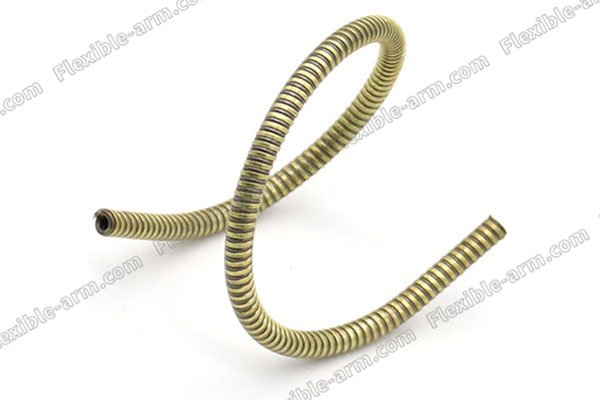
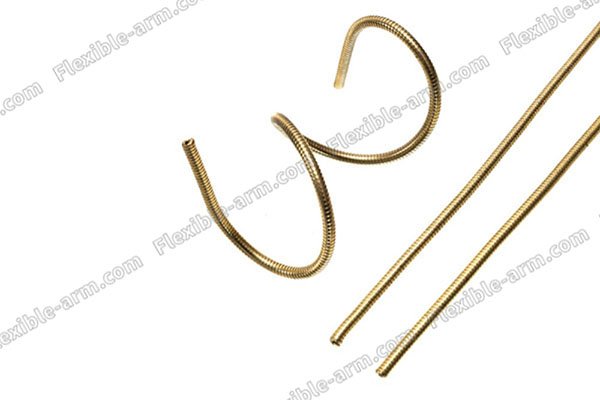
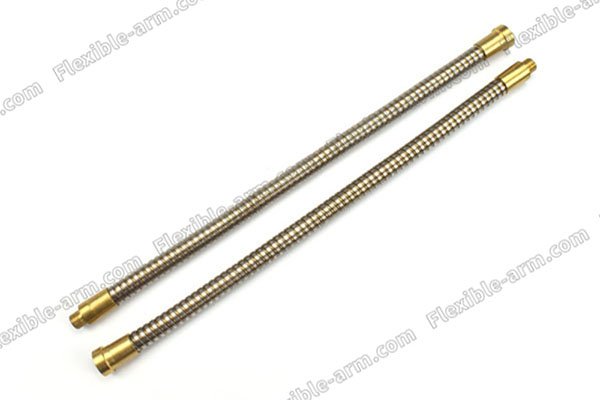
Start with the brass and stainless steel flexible arm range and identify the positioning component or assembly required. List the flexible section, end fittings, mounting parts and any internal cable. Request a description of the actual construction in the quotation and drawing.
Specify relevant brass, stainless steel, end-fitting and joining materials, or request a proposed specification for review. Do not infer a brass core and stainless outer layer from the product name. Identify any plating or coating and provide an appearance reference. Ask which components the available material documents cover.
Provide overall and active flexible length, outside diameter, required usable clearance and dimensional tolerances. Include cable and connector dimensions if they must pass inside. Confirm clear passage through the flexible section and fittings and agree sample checks with the intended cable and bending route. Request finished end preparation rather than assuming on-site cutting or refitting is suitable.
Supply mating threads, engagement, shoulders, sleeves or other interfaces at both ends. Show installation orientation, supported-device mass, center of gravity, maximum reach and working positions. Agree adjustment effort, allowable drift and bend or rotation limits with the proposed assembly.
A positioning gooseneck name does not establish a sealed pressure line, fluid or gas hose, hydraulic component or qualified electrical conduit. If the project needs one of those functions, state the service, pressure, temperature and other requirements and request a confirmed appropriate product with applicable documentation. Do not use mechanical positioning specifications as evidence of those additional functions.
Describe actual temperature, moisture, cleaning chemicals, handling and storage conditions. Request review and applicable evidence for the complete construction, including fittings and finishes. Agree load, reach, positions, hold duration, drift, movement sequence and cycles. Inspect dimensional fit, fitting security, finish and any cable before and after testing; results apply to the tested configuration and conditions.
Review the stainless and brass support-assembly guide and complete the OEM RFQ checklist. Then send your tubing geometry and intended-function requirements. Include sample and batch quantities, finish, packaging and delivery needs; confirm feasibility, supplied components, MOQ and lead time.