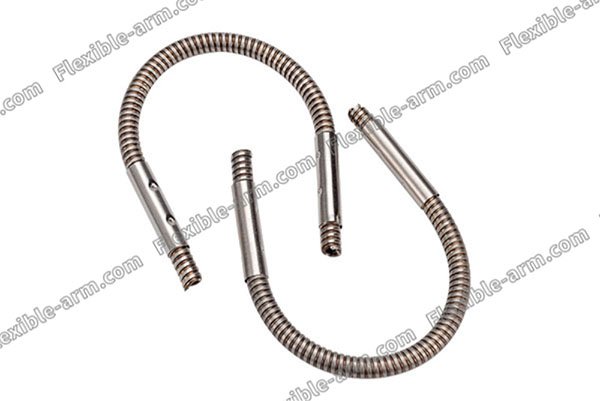
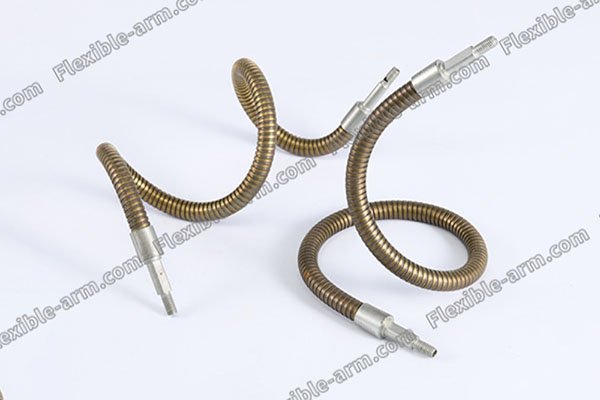
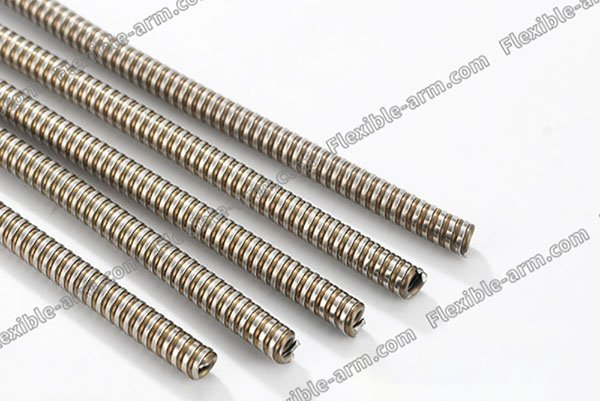
Brass and steel flexible arms can be specified as adjustable positioning components for an OEM assembly. Start with the supported load, reach, mounting interface and adjustment pattern. The material name alone does not establish a waterproof enclosure, electrical conduit rating or suitability for a regulated application.
Provide the arm length, outside and inside diameters, end fittings, cable clearance and the load at its working offset. State whether the arm holds a lamp, sensor, microphone or another component, and whether adjustment is occasional or repeated. Agree a sample evaluation for position holding, drift, adjustment force and the proposed service cycle.
Ask for the actual alloy or steel grade, construction, coating and end-fitting materials in the quotation. Review exposure to humidity, salt, cleaning agents and temperature against that complete configuration. Brass, plated steel and stainless steel require separate material and finish decisions; none should be selected from a general corrosion-resistance claim alone.
The industrial flexible metal hose terminology covers different constructions. Confirm whether the quoted item is intended for positioning, cable routing or a separately rated hose service before comparing offers.
If a cable passes through the arm, check usable bore through bends, connector clearance, entry edges and the need for separate strain relief. Mechanical cable routing does not by itself demonstrate electrical bonding, EMI shielding, liquid-tightness or a hazardous-location rating. Require applicable test reports and approved fittings when the finished installation needs those properties.
When evaluating a brass armored cable conduit, request the construction details and the intended service conditions. Verify any claimed conduit or enclosure approval against the exact supplied assembly and installation method.
Send a drawing or sketch, quantity, load and reach, material preference, finish, end interfaces, cable dimensions and operating environment. Include packaging, inspection and documentation requirements. For a brass flexible conduit option, ask the supplier to confirm the offered configuration, sample plan and production lead time in writing before approval.
Approve the sample against recorded acceptance criteria before releasing production. Inspect supplied parts against the agreed drawing and retain the material, finish and test records required for your assembly.