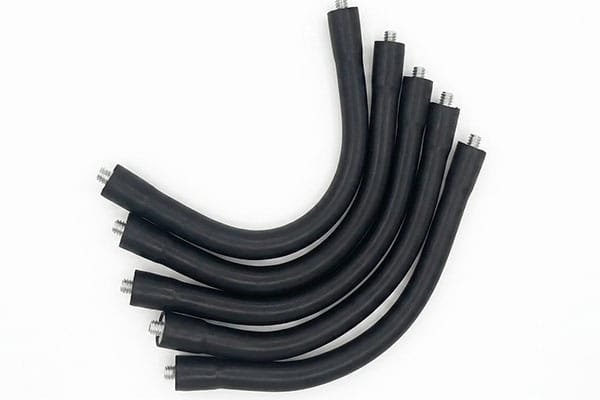
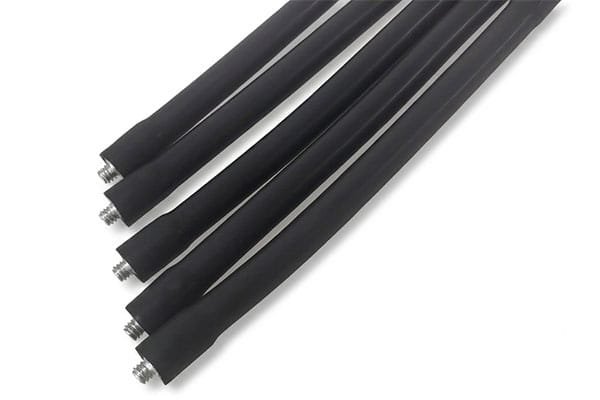
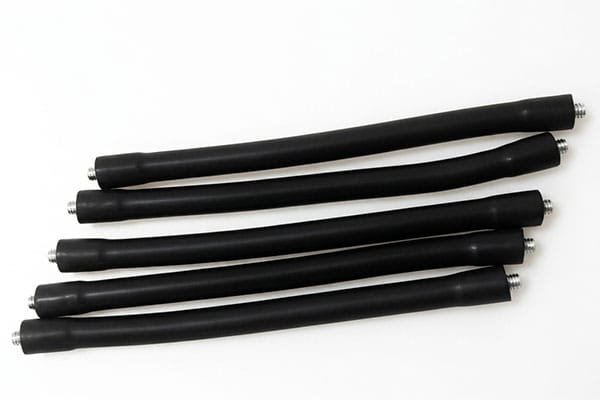


Review the silicone-covered gooseneck range and define the component your lighting assembly needs. Confirm whether the quotation includes the support tube, end fittings, cable, lamp head or mounting base. Do not assume this component is supplied as a complete powered light.
Provide lamp-head mass, center of gravity, reach from the mounting point and the intended working positions. Include cable forces and any vibration. Agree permitted movement after release, holding time, manual adjustment effort and any noise requirement. Test the proposed assembly in its least favorable working position rather than assuming unlimited rotation, no sagging or a universal service life.
Specify the required cover material grade, finished outside diameter, color, surface appearance and fit. Describe expected operating temperature, moisture, sunlight and cleaning exposure. Ask for applicable material data and agreed sample tests. A silicone covering does not by itself establish waterproofing, UV resistance, chemical compatibility, electrical insulation or medical suitability.
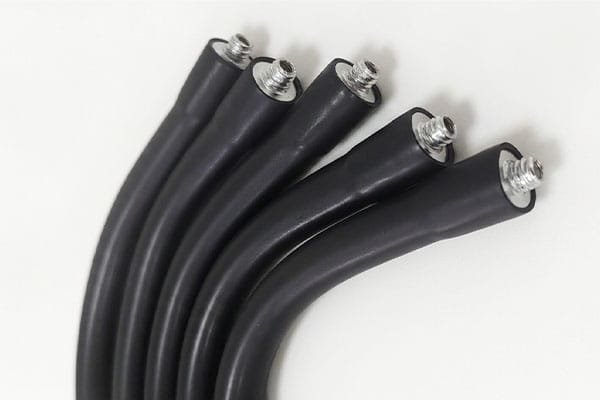
Provide cable and connector dimensions, required internal passage, exit locations and strain-relief requirements for review. Define tube length, thread size and pitch, engagement, fitting orientation and mating-part dimensions. Confirm the feasible bending route with the intended cable installed; do not infer cable clearance or wiring protection from the outside diameter alone.
Agree a test load, reach, orientation, holding period, repositioning sequence and cycle count. Inspect tip movement, adjustment effort, fitting security, cover condition and cable condition against agreed limits. Include any specified temperature, cleaning or exposure test with its method and acceptance criteria. Keep the approved sample, drawing revision and inspection record for repeat orders.
A gooseneck support can be considered as part of task lighting, inspection lighting and other adjustable fixtures, subject to assembly evaluation. For medical, outdoor or damp-location use, identify the separate qualification and documentation requirements for the finished product before selecting the component.
Compare covering options on the silicone-covered flexible arm selection page. Use the OEM drawing and RFQ checklist, then send your lighting assembly requirements for quotation. Include sample quantity, expected batch sizes, packaging and delivery requirements for confirmation.