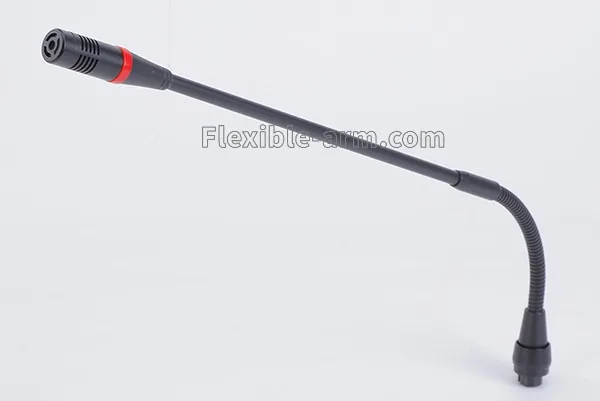
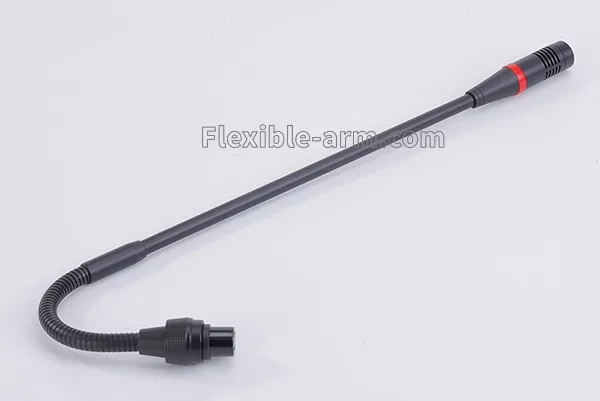
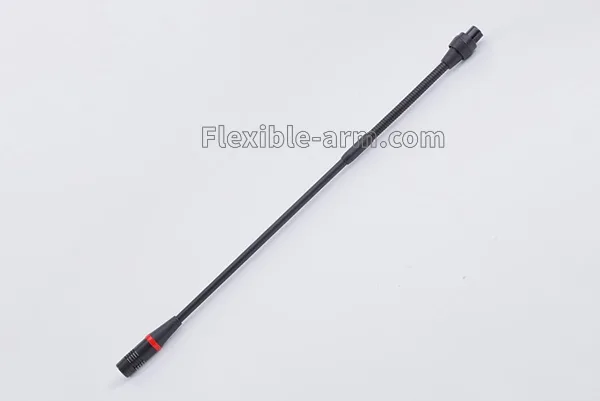
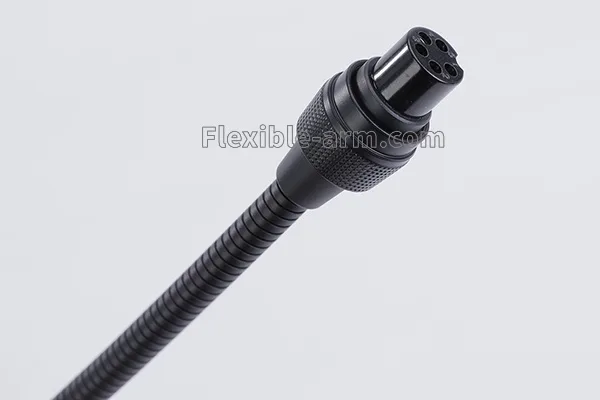
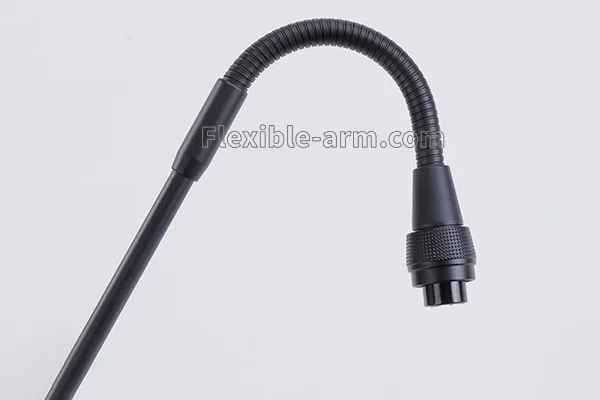
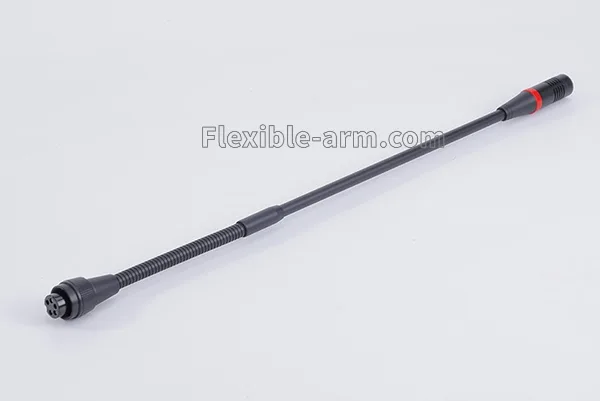

Start with the position of the microphone head relative to the mounting surface. A lectern drawing should show the panel angle, base location and desired head position. For a tabletop unit, give the base height and the horizontal reach needed for a seated speaker. These dimensions help establish the working length and stiffness of the arm.
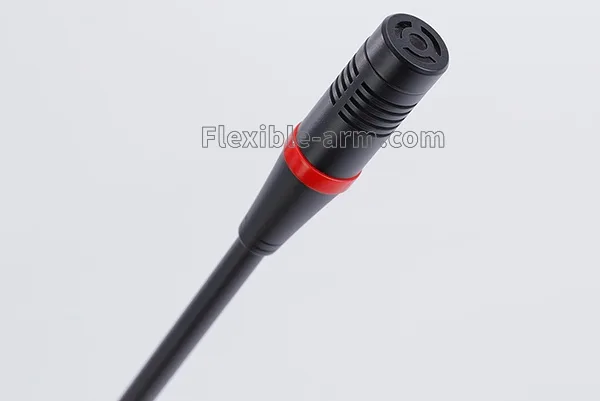
Identify each end separately. At the base, specify the thread diameter and pitch or the dimensions of the mounting socket. At the top, supply a drawing of the capsule housing or microphone clip and its assembled weight. For internal wiring, state the cable outside diameter and whether an assembled connector must pass through either fitting.
Fit the sample to your base with the microphone head and cable installed. Set it at the longest intended reach and check for drift. Move it between the positions speakers will use, checking adjustment effort, cable clearance and whether either fitting loosens. Include any required changes, finish and production quantity with the sample review.
For a slimmer arm that mounts on a headset, see our custom microphone boom arms.
This page covers the mechanical gooseneck arm for microphone assemblies. Specify whether your request includes end fittings, a base, a microphone clip or cable routing. Confirm the supplied parts in the quotation; a microphone capsule, electronics and audio performance are separate requirements.
Compatibility depends on the actual interface. Send the base thread diameter and pitch or socket drawing, the head fitting drawing and any connector clearance requirements. Check the assembled sample before approving production.
Specify the microphone head and accessory weight, horizontal reach, mounting angle and intended adjustment positions. Evaluate holding drift and adjustment effort with the actual head and cable fitted. Length alone does not establish a safe working load.
Include a dimensioned drawing, working length and reach, both end connections, cable outside diameter, finish, sample quantity and expected production quantity. State any acceptance tests and required delivery date so they can be reviewed with the proposed configuration.
For component dimensions and the tubing specification checklist, see our flexible gooseneck tubing guide. Send your microphone gooseneck drawing for a quote.


