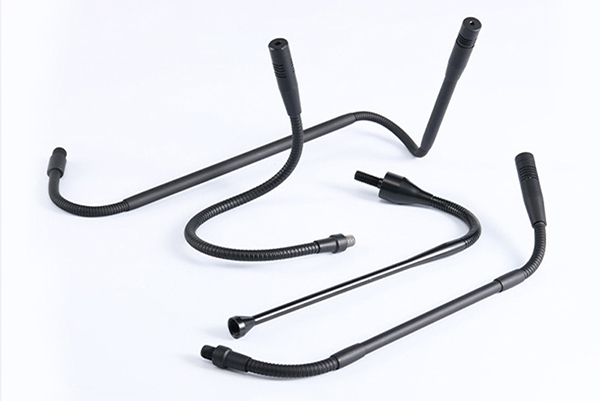
A flexible positioning tube starts with an inner spring. A second wire is wound around it so the arm can bend by hand and resist movement once positioned. For an OEM assembly, the starting point is the load at the end of the arm and how far that load will extend from the mounting point.
Choose the spring and winding together. A spring-steel core with a galvanized iron winding is one option for heavier holding duties. Brass and stainless steel windings are other options when adjustment feel, exposed finish or the operating environment matters. Compare the gooseneck tubing materials and selection criteria against the intended assembly.
Wire is coiled to form the inner spring. The outer wire is wound tightly around the spring and pressed into the gaps between coils. Contact between the wound elements helps the arm hold a bend. The selected wire sizes and winding geometry affect adjustment effort and the space available for a cable.
Specify the connection at each end before selecting the finish or sleeve. A threaded stud, socket or mounting base must match the mating part. For a wired assembly, check clearance through both fittings as well as through the tube, particularly if a connector is already attached to the cable.
Mount the sample in the intended orientation with the actual head and cable attached. Set it at the longest horizontal reach used in service. Check for drift, confirm that the fittings stay secure, and bend the arm through its working range to assess adjustment effort and cable clearance.
Send the finished tube length, outside diameter, required cable clearance, head weight, horizontal reach, end fitting drawings, finish and expected quantity. Include sample and production quantities separately so the factory can review them with the design. Use the OEM RFQ checklist to prepare the details, then request a quotation.
Record the drawing revision and the sample configuration before placing a production order. Identify the tube material and dimensions, both end fittings, finish, cable path and components included. Keep the approved sample or an agreed inspection reference so later checks use the same configuration.
State which dimensions are critical to assembly and whether they apply before or after finishing. Define the mounted weight, test orientation, working reach and acceptable holding drift. Where repeated adjustment is part of the requirement, agree on the bend range, cycle count and inspection criteria. Specify the inspection records required for the order rather than assuming that a material name or product photo establishes a performance rating.
For a steel-based configuration, review the carbon steel gooseneck tubing requirements alongside the load and exposure conditions. For a painted assembly, use the color painted gooseneck tube approval checklist to define the color reference, finish appearance and surfaces that must remain uncoated. Confirm the actual material and finishing route in the quotation.
Flag changes to the mounted device, working reach, end interfaces, cable or finish when requesting a repeat order. Decide whether a revised sample or additional checks are needed before approval. Include protective packaging, quantity, destination and any requested documentation in the order specification. Ask for the schedule for the agreed configuration; this guide does not establish a universal minimum order quantity or lead time.