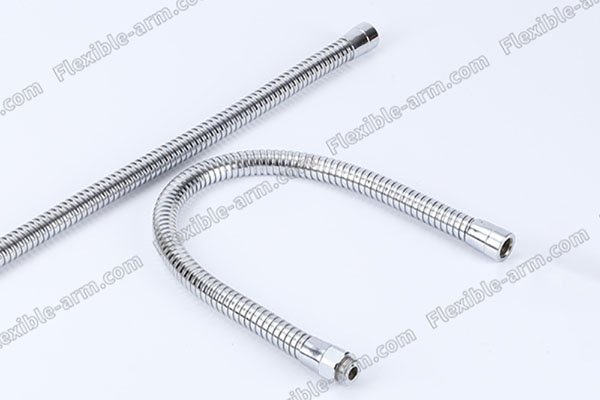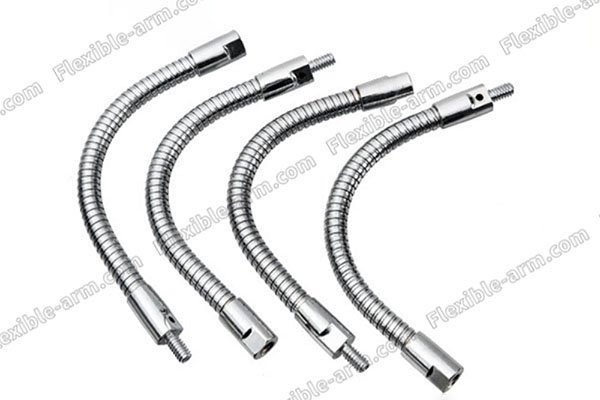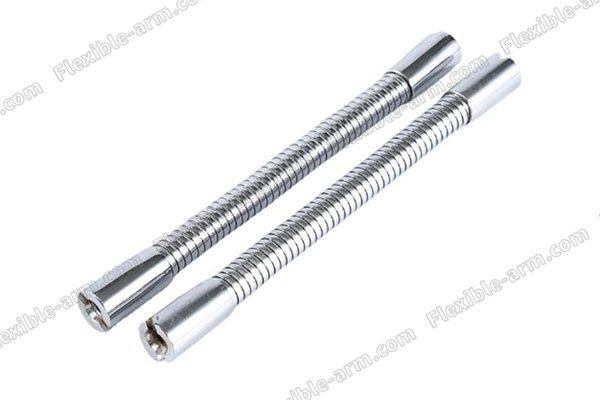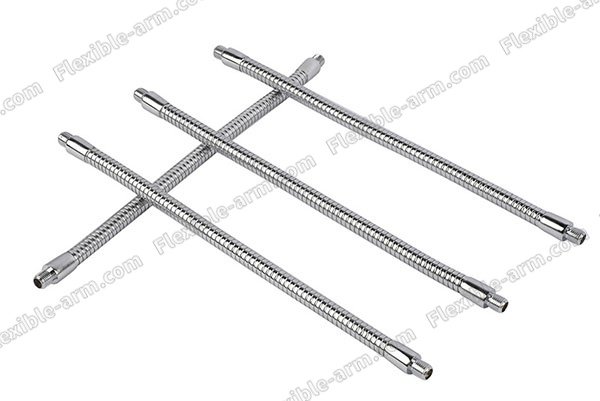
Specifying a chrome finish gooseneck requires a review of appearance, the underlying tube construction and the mounting interfaces. A bright surface can communicate the desired look, but it does not identify the base material or establish the performance of the completed assembly.
Ask for the substrate and finish process to be identified in the quotation. Keep those details separate from the core and winding materials used to make the positioning tube. A chrome appearance is not evidence that the component is made entirely from stainless steel or that it can carry pressurized water.
If the project includes a fluid-carrying assembly, that assembly needs a separate design and validation specification. Do not infer sealing, pressure capability, potable-water suitability or thread compatibility from a positioning tube's product name.
Use a physical reference sample to agree gloss, color tone and the appearance of the flexible section beside the fittings. Mark visible and concealed surfaces. Discuss acceptable marks near joints, transitions and mounting faces, and specify how parts should be protected during transport and assembly.
If different components must look consistent, compare them together under the agreed inspection conditions. A photograph may help explain the design intent, but lighting and display settings can change the perceived finish. Record the approved sample and any measurable appearance limits required by the buyer.
Specify the supported component and cable weight, arm length, longest reach and mounting orientation. Test the arm in its intended working position. Check the required adjustment feel, clearance around adjacent parts and resistance to drift. A finish description does not replace this mechanical review.
Provide thread size, pitch, gender and engagement length, together with shoulders and mounting faces. State how the arm attaches to the customer's product and whether fittings or clamps are included. Check the minimum finished bore if wiring passes through the arm, including installation space for any connector.
Describe humidity, cleaning, handling and other exposure conditions relevant to the finished application. Agree specific tests and acceptance criteria where needed rather than relying on broad claims of corrosion or heat resistance. Include drawing revision, sample quantity, production quantity and packaging requirements in the enquiry.
Review chrome finish positioning gooseneck tubes for the product enquiry. For a different visual finish, see the black finish specification guide.
Download the gooseneck RFQ template to organize the dimensions, interfaces and acceptance checks, then send the project requirements for review.